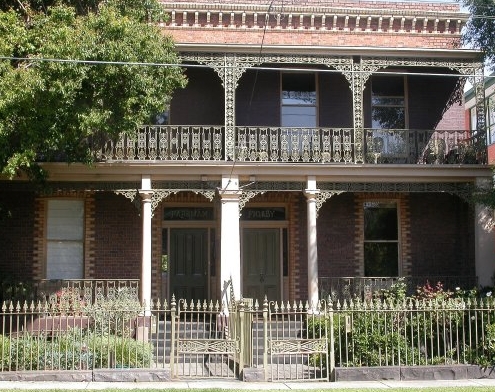
Albert Tucker and Joy Hester once lived here, along with their son, Sweeney Hallam Tucker.
| Other Names | Nil |
| Date Built | 1867 |
| Architect | Unknown |
| Builder | William Allen |
| Owners | William Allen |
| Description | Roman Doric columns. Two polychromatic brick terraces, three stories each. The basement is below street level. |
| History | Albert Tucker and Joy Hester lived here, along with their son, Sweeney Hallam Tucker. Janine Burke, Albert Tucker’s biographer, believes he completed some of his best artworks while residing here. The two terraces were renovated by Urban Spaces Pty Ltd in about 1980, after being boarding houses for around 40 years. The back balconies were removed so that more light could be let in. |
| Occupants | Henry Figsby Young; Marcus Clarke (author of For the Term of his Natural Life); Albert Tucker & Joy Hester |
| Obituaries Australia Entry |
Reference/s: Image and content: Richard Peterson, A Place of Sensuous Resort: Buildings of St Kilda and their People, Chapter 9
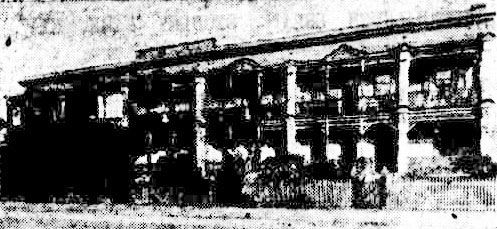
47 Robe Street
St Kilda,Victoria
Australia 3182
St Kilda,Victoria
Australia 3182
Southern side Robe Street intact